

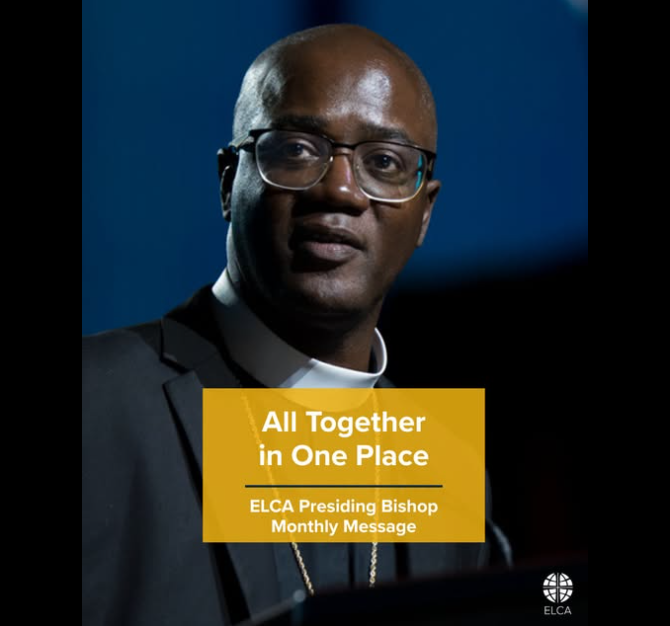
Presiding Bishop Yehiel Curry issues his third in a series of monthly messages that continue through the end of this year, titled "All Together in One Place." Each message will share a pastoral word, rooted in Scripture, that witnesses to God’s presence today, our rich theological tradition and the social teaching that connects us.
Dear church,
From its earliest days, the United States has been shaped by religious diversity. Indigenous peoples sustained diverse spiritual and religious traditions long before the nation’s founding, and successive waves of settlers, including Protestants, Catholics, Jews, Muslims, Buddhists and others, brought a variety of beliefs that helped define the nation’s unique and vital religious landscape.
Throughout the church today, many are struggling with debates regarding the religious identity of our nation. While religious diversity did not begin with the Constitution, the Constitution’s framers recognized an important truth: the future of our nation could not be tied to a single religious identity. By rejecting religious tests for public office, the Founders created space for people of any or no faith tradition to participate in public life together. That commitment continues to be foundational to our nation’s vitality, especially at a time when people are tempted to identify love of the nation, or the government itself, with a single religion. No one faith tradition should rule the United States, just as the framers desired.1
As the apostle Paul writes, God has given us “the ministry of reconciliation” (2 Corinthians 5:18). Reconciliation involves living in God’s future — including through renewed interreligious relationships.
Religious diversity is the reality of the world we live in. Recognizing this, the Evangelical Lutheran Church in America adopted “A Declaration of Inter-Religious Commitment,” which affirms that mutual understanding with other faith traditions can deepen our own faith. Through encountering neighbors and working side by side in shared commitments to love and compassion and community, our own Christian faith is strengthened. This conviction means that through my call as presiding bishop of the ELCA, our church develops and maintains relationships with Jewish, Muslim and many other faith communities. Like personal friendships we hold, these relationships do not require us to set aside Christian faith. Rather they reaffirm that in a nation as diverse as ours, being a good neighbor across religious differences is not optional. It’s a part of the shared American experience. It is an experience we can support as everyday Lutherans in God’s call to reconciliation.