Recently, the Supreme Court issued a decision that will allow this administration to proceed with terminating Temporary Protected Status (TPS) for more than 330,000 people from Haiti and 3,800 from Syria, many of whom have lived in this country for decades. They are not strangers. They are part of the fabric of our whole society. The termination of TPS threatens to separate families, destabilize local economies and force people to return to countries where they may face severe humanitarian crises, violence and threats to their very lives.
Summer's Invitation to Slow Noticing: A Creative Practice
Pastor Liv Larson, Director for Evangelical Mission
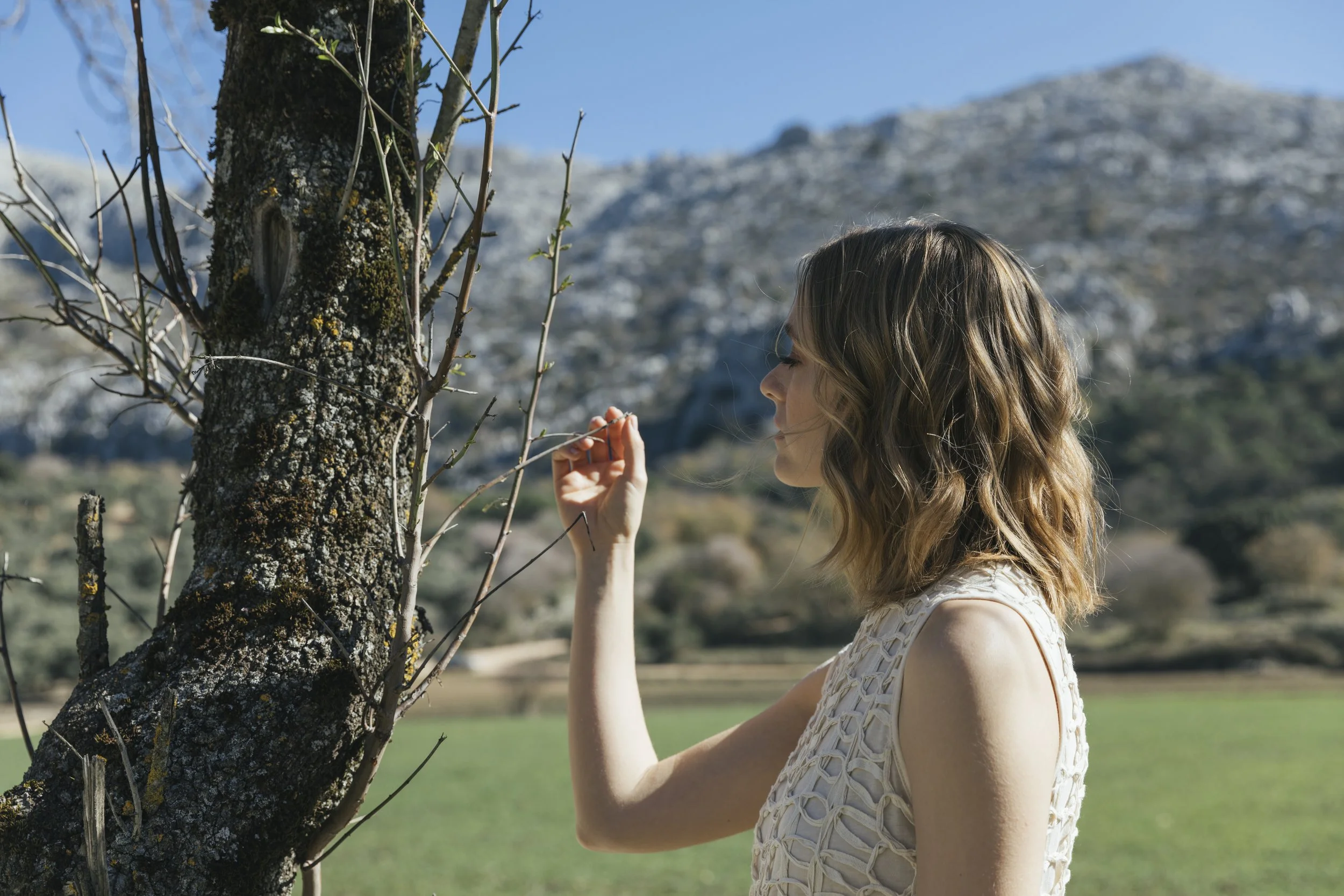
It's too hot to cook tonight. It's also too hot to insist that the boys get off the iPad, though I want them to. It's almost too hot to do anything. Then I remember the river.
We pack a picnic and head for our new favorite spot. We jump in and swim. Our bodies cool and our brains come back into focus. There is a great blue heron standing upstream in the river and an osprey nest above us. We eat our picnic slowly on shore, one set of toes on each of our bodies wanting to jump back in the cold, healing water.
Summer is weird, rhythm-wise. Folks are always coming and going on trips. Days are long and unstructured, which can be both a gift and a curse. What day is it anyway?
As God's people, each season brings a fresh perspective on our relationship to the Creator, the author of the seasons. What is God up to in summertime? Napping? Swimming? I hope a bit of both.
Earth is also rather productive in summer, bearing all kinds of delicious fruits for our benefit. We can join this creative flow. But I think that participation in the creative life begins with a spiritual practice of slowing down and noticing. Noticing.
Here are a couple of summer prompts for noticing God's movement around you:
What plants have bloomed or gone to seed near you in the last few days? Draw them.
What hills or fields near you have changed in color recently? Write a story or poem from the field's perspective.
What new or different smells greet you as you walk around your neighborhood? List everything you sense.
Color me surprised when I came across a synchronous thought about creative practice, spanning at least 900 years:
Hildegard of Bingen taught that the human soul was the instrument on which God played music. Rick Rubin, music producer and founder of Def Jam records, writes, "No matter what tools you use to create, the true instrument is you. And through you, the universe that surrounds us all comes into focus." What? How are these two souls so in tune that they express a nearly identical thought about God and human creativity?
Let's try it...
Take a slow walk in your back yard or in a nearby park. What colors and smells come into focus? What holds your attention? Heed that. Lean in.
Summer gardens are an embarrassment of riches. (I myself can't grow a single tomato...) But the point is that God, the good Creator, has fashioned you to be a creative leader. And step one of the creative life is slowing down our pace and simply taking notice of everything happening all around us.
Tell me what you find!
Happy noticing,
Liv
Pope Leo XIV’s First Encyclical Outlines Ethical Challenges of Artificial Intelligence
Published on May 25, Magnifica Humanitas, Pope Leo XIV’s first encyclical, addresses the ethical challenges of artificial intelligence and calls for the safeguarding of human dignity in a rapidly changing technological world. It teaches that though technology and AI can be powerful tools for good, they are never neutral and must be guided by moral responsibility, the common good and respect for the human person.
“Creation in Christ”
A new ELCA Worship blog post provides background and practical implications for an addition to the church year calendar.
AMMPARO
Lutheran Disaster Response
Loaves and Fishes: Expanding the Reach of Music Ministry in Your Congregation
June 2026 Mission Support Memo
Power of a Network
A story from our Southwestern Texas Synod written in collaboration with Rev. Ricardo Jimenez
“As you read this story, what inspires you?
How is your congregation creating networks?”
“But you will receive power when the Holy Spirit has come upon you, and you will be my witnesses in Jerusalem, in all Judea and Samaria, and to the ends of the earth.” Acts 1:8 (NRSVUE)
If you ever need to reach a church in the Rio Grande Valley of Texas, you’ll be dialing “956” as the area code. This area is a unique blend of American and Mexican cultures, tucked in the furthest most point of the state, far away from San Antonio and Austin. What you will find here is the Holy Spirit actively weaving congregations, communities, and partners together like tributaries feeding into something greater and carrying it out “to the ends of the earth.”
The 956 River of Faith Network, originally The Valley Metanoia Network, is a Synod Authorized Outreach ministry of our Southwestern Texas Synod. The network serves the Rio Grande Valley (RGV) as a ministry focused on sharing resources, support, and creativity; exploring contextualized forms of worship and belonging; and connecting with partners seeking justice, compassion, and Christ’s unconditional love.
Texas is vast with huge distances that can feel very isolating. The congregations in the valley have felt isolated from and in the church, but this network is an intentional ministry, funded in part by ELCA and Synod resources, to ensure a consistent presence that connects them to each other, the synod, and vital partners.
It was important to the congregational and community leaders involved in this network to find a name that flows from the Valley itself. A name that reminds us this is not about one church or one leader; it is about a river. A river that renews leaders, helps congregations collaborate, and transforms communities. It is not about creating new churches, but about mission connections, community networks, and building more just systems and holy gathering spaces.
The RGV has 1.4 million residents with 93% Hispanic/Latino and predominantly young adult. As is common in more isolated locations, many congregations are considering future closures, pastoral vacancies, and stretched resources, making the area both a challenge and an opportunity for fresh expressions of faith and mission.
That’s why the network is excited to come together to create spaces of collaboration where congregations and leaders will gather in prayer, listening and experimentation. They will partner to equip and connect offering training and mutual support. They are excited to make a collective impact on their communities, create a place to serve together and reflect on shared wisdom. With many deep connections in the community already, the network hopes to nourish and swell its partnerships with Proyecto Desarrollo Humano (Project for Human Development), alongside Sister Fatima in the colonia’s, to continue vigils at Jackson Ranch, to continuing bi-lingual and Spanish service opportunities at St. John in San Juan, to offering placements for University of Texas RGV social work students, and working with Mount Calvary Christian Church, an intentional LGBTQIA+ community. They also intentionally sought to strengthen ecumenical and full-communion relationships in the Rio Grande Valley, particularly through our partnerships with the United Church of Christ and Church of the Advent Episcopal in Brownsville. Definitely building a full spirit of collaboration and accompaniment.
There is no lack of partnerships and these congregations are committed. They are also eager to look with hope toward new collaborations soon to come, like Camp Hope and Camp Chrysalis, places where children and youth will experience community and faith in ways that ripple outward. The Spirit is powerful in the Valley. The 956 River of Faith Network flows intentionally forward, linking local community and surrounding networks while connecting across ethnic and cultural divides all to transcend boundaries and build bridges in the name of Christ.
ELCA What Does My Offering Do? Document
We are excited to share an updated version of the "Mission Support: What Does My Offering Do?" flyer available for you to use and share. This resource is meant to help congregations and worshipping communities see how their offering becomes Mission Support and how that Mission Support impacts the ministry of the whole church through the churchwide organization. As a connected church, the Mission Support that you share with the churchwide organization helps to grow Christian communities, accompany Lutherans globally, and sustain the ministry of the whole church. This resource provides a succinct breakdown of how the churchwide organization stewards Mission Support. In the coming weeks, we will also share a synod specific version that celebrates the Mission Support your synod shared with the churchwide organization in 2025. Both this version and the synod specific version will be available in Spanish as well.
We are grateful for connections between congregations, across synod conferences and clusters, and with community partners that allow our church to connect to community needs and partner with valuable resources. These networks allow us all to more fully live out Christ’s command to love our neighbor.
We thank Presiding Bishop Curry for calling us all to be more connected and to “be together in one place, when that place is connection in the unity that only Christ gives us” (1 Corinthains 12:12-27). Read his full monthly message here.
In gratitude,
Victoria Flood, Senior Director for Congregation and Synod Support
Nick Kiger, Director for Mission Support
Karen Kretschmann, Coordinator for Storytelling Engagement
Wildfire Relief - Where might you send donations?
We know we are in for a long wildfire season. In consultation with Ray Shjerven, our Washington State VOAD (Voluntary Organizations Active in Disaster) liaison, we as a synod staff are lifting up the organizations, who could receive your donations.