Originally written for ELCA’s Sumud’s 2026 Lent Devotion Series
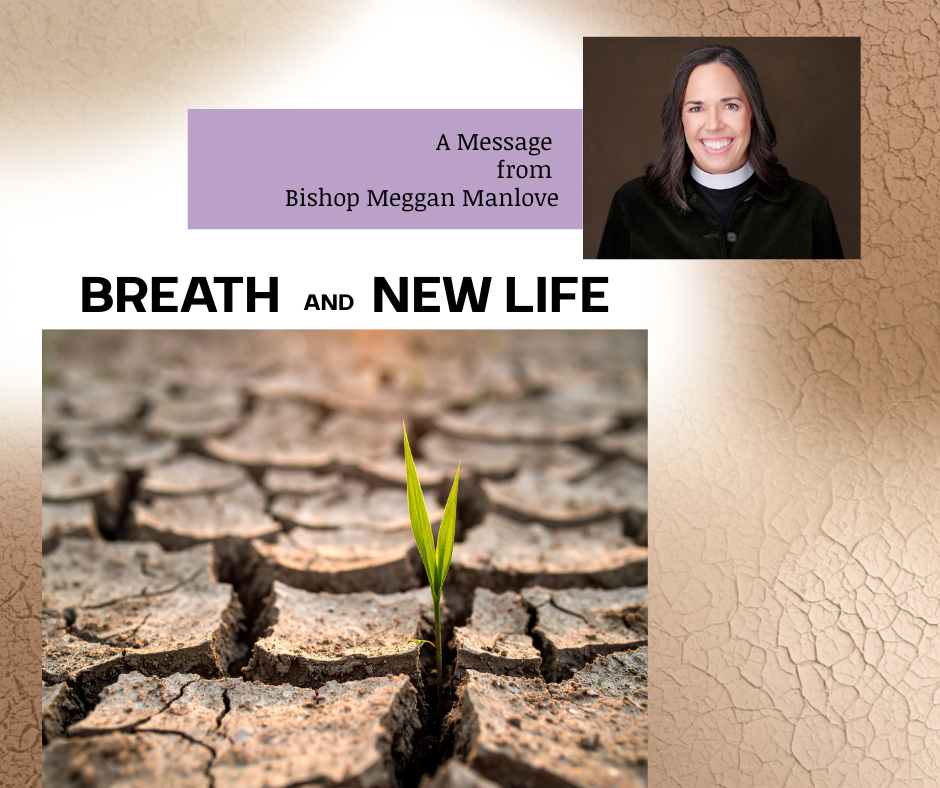
If people know one passage from Ezekiel, it’s the Dry Bones passage. It is one of the Easter Vigil salvation history texts so is often reflected on, as here, or preached on during this liturgical season of Lent. All that is to say that this vivid and layered story has its own rich history of interpretation.
The bones of course signify loss of human life but also the loss of a collective identity, (“these bones are the whole house of Israel,” v. 11), aspirations for liberation, and the loss of a homeland. As the passage unfolds, as Ezekiel goes on his tour, what we experience as readers is hopelessness and despair. Scholar Michael Chan says the real question is, “Can hope take root and bloom again in the aftermath of such violence and loss?”
This year, I am bringing to this well-known text my participation in the Bishops Accompaniment trip to the Evangelical Lutheran Church in Jordan and the Holy Land (ELCJHL) in January. As prominent as Ezekiel’s and the bones’ roles are in the story, we might lose sight of the fact that God is the primary actor, and God is doing nothing less than bringing life from death. When I read this text with my former congregations in Iowa and Idaho, I always emphasized that communal character of the story, that is, it is an entire community being resurrected!
Can breath from a global Lutheran church body like the ELCJHL blow through the atmosphere and give life to the rest of the church? If it could, the breath would whisper about six congregations plus schools and other ministries who are giving life to their local communities. The Palestinian Lutheran Christians we met are serving everyone in their midst in need—school children trying to learn whenever they can get through gates and checkpoints and make it to the classroom, a new diakonia ministry which gives mutual aid and walks with people of all religions and all backgrounds, an environmental learning center banding birds and creatively leading others in water conservation, and of course the congregations themselves equipping people to love boldly and without fear. Bishop Amad told us that the ELCJHL is not there to stay behind closed doors but to be sent out. Undergirding this ministry and witness is a language of faith that was ongoing. Under the weight of occupation and oppression, God is both present and talked about. God’s Holy Spirit is their breath, their sustenance. Perhaps because I have lived in spaces shaped by agriculture most of my life, I was most attuned to the breath and story of the Tent of Nations, a farm run by the Nassar family for 100 years near Bethlehem. Despite incredible documentation of the farm’s history, the Israeli government continues to battle with them in court, trying to take the land. Despite this ongoing struggle and encroaching settlements, the Nassars are committed to nonviolent resistance, faith-based community building, and connecting other people to the land. Their faith and hope was palpable—new oxygen, at least for me.
Might this breath somehow give new life to the church in the United States? Can these bones of our church live? I echo the prophet Ezekiel, “O Lord God, you know.” Only God knows. Only God can bring life from dry bones. But my imagination and vision were helped by our trip to the ELCJHL and the words and witness of those we met, just as my imagination is helped when I visit congregations in the NWIM Synod who are boldly walking in solidarity with their neighbors, guided by Jesus’ command to love.
Bishop Meggan Manlove
Read more about the trip on my BLOG